Guide
Tax and Making Tax Digital for delivery riders and drivers
Riding for Deliveroo, Uber Eats or Just Eat, or delivering parcels with Amazon Flex, usually makes you self-employed. Many riders won’t need Making Tax Digital until 2028, but the records you keep now decide how much tax you pay.
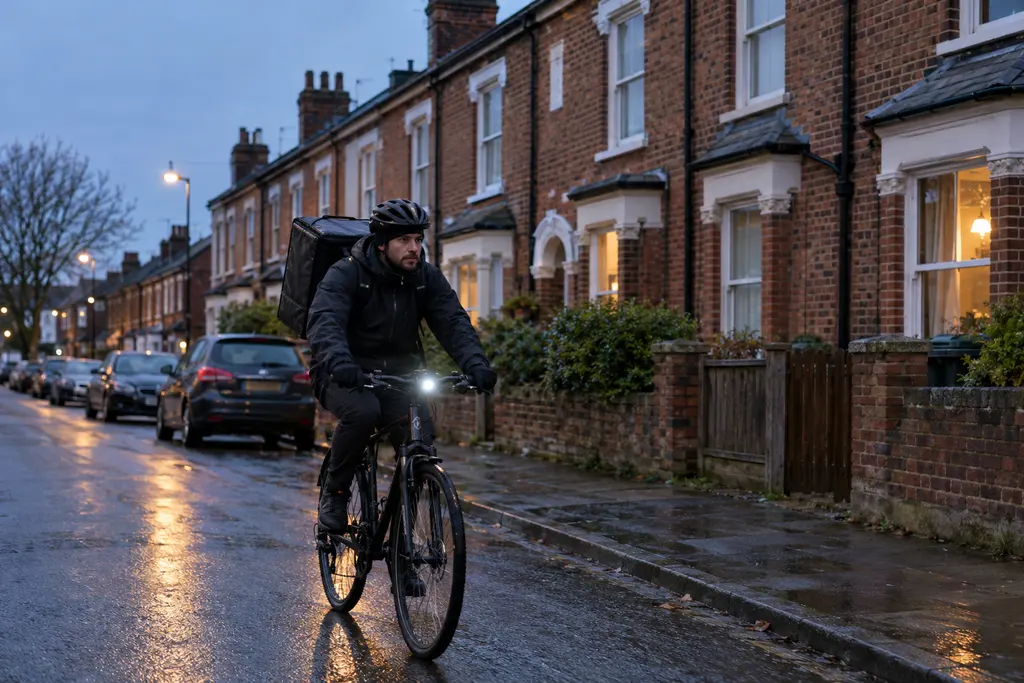
Food delivery apps and parcel apps like Amazon Flex pay riders and drivers as self-employed contractors. That means no tax is taken before you’re paid. You report your earnings yourself through Self Assessment and pay Income Tax and Class 4 National Insurance on the profit.
Not every delivery driver is self-employed. If you drive for a delivery company that pays you through payroll, with tax taken off your wages, that work is employment and none of this applies to it.
The first £1,000
If your total takings from self-employment are £1,000 or less in a tax year, the trading allowance covers them and you don’t need to tell HMRC. Above that you register for Self Assessment. The allowance is measured on takings before costs, and it’s one allowance for all your self-employment together, not £1,000 per app.
Several apps are usually one business
Plenty of riders switch between two or three apps. Doing the same kind of delivery work through several apps is usually treated as one self-employment, so you add the takings together on one set of books and one return.
When Making Tax Digital applies
Making Tax Digital starts when your qualifying income, your self-employed and property takings before costs, goes over £50,000 from April 2026, £30,000 from April 2027 and £20,000 from April 2028. HMRC uses a return you’ve already filed, from the tax year that ended a year before each start date.
Say you took £9,000 on Deliveroo, £8,000 on Uber Eats and £6,000 on Amazon Flex in 2026 to 2027. That’s £23,000. It’s under £30,000, so April 2027 doesn’t catch you, but it’s over £20,000, so you start quarterly updates in April 2028. Wages from a job don’t count towards the figure.
What counts as income
Everything the apps pay you: delivery fees, tips, boosts, peak-time bonuses and adjustments. Your yearly statements from each app are the starting point. If a statement shows a fee the app kept, record the full amount as income and the fee as an expense. It all goes in your sales income, which HMRC calls turnover, not in “other business income” (here’s why).
What you can claim
- A car or van: 45p a mile for the first 10,000 business miles and 25p after, or the actual running costs instead.
- A motorbike or scooter: 24p a mile, or the actual running costs instead.
- A bicycle or e-bike: there’s no simplified mileage rate for a bicycle if you’re self-employed, so claim the actual costs: repairs, tyres, lights, locks and the cost of the bike itself through capital allowances.
- Your insulated bag, phone mount, power bank, hi-vis and safety kit.
- The business share of your phone and data plan.
- Business insurance the apps don’t provide, and parking on deliveries. Fines and penalty charges are never allowable.
Whichever method you pick for a vehicle, you keep it for as long as you use that vehicle. Keep a simple log of business miles; the apps’ delivery history helps back it up.
Records now, quarterly updates later
You don’t need Making Tax Digital before your start date, but keeping digital records now makes the switch painless and makes your yearly return quicker. Record each week’s payout from each app, and costs as you pay them. Quarterwise is free for your self-employment, including filing with HMRC when your time comes.
This guide is general information, not tax advice.
Common questions
Do I pay tax on Deliveroo or Uber Eats tips?
Is the £1,000 trading allowance per app?
Can I claim mileage on a bicycle?
I deliver for a company that pays me through payroll. Do I need Making Tax Digital?
Last updated 7 November 2026. Quarterwise is software, not a tax adviser — if you’re unsure how the rules apply to you, check with HMRC or a qualified accountant.
Related guides
Be ready for Making Tax Digital.
Set up your business or first property in a few seconds. Free for your self-employment or one property, no card needed.